
Addressable vs Conventional Fire Alarm - Maintenance Differences & AMC
A fire alarm system is only useful when it works at the right time. Regular maintenance helps keep every detector, control panel, and alarm in good condition. But not all fire alarm systems need the same level of care. Addressable and conventional fire alarm systems are built differently, so their maintenance processes are also different. Knowing these differences can help you plan inspections, reduce repair costs, and choose the right Annual Maintenance Contract (AMC). This guide explains how both systems are maintained, what an AMC usually includes, and how regular servicing helps protect people, property, and business operations.
Why Fire Alarm Maintenance Matters
Fire alarm maintenance helps the system work properly when it is needed most. Dust, moisture, damaged cables, and ageing components can affect its performance over time. Regular servicing helps find faults early, reduces false alarms, extends system life, supports fire safety inspections, and lowers the risk of unexpected breakdowns during an emergency. It also helps clear up some of the common fire alarm myths that lead building owners to under-maintain their systems.
Understanding the Two Fire Alarm Systems
Before comparing maintenance, it helps to understand how these systems work.
1. Addressable Fire Alarm System
An addressable fire alarm system gives every device its own unique address. When smoke or heat is detected, the control panel shows the exact detector or location that triggered the alarm. This makes fault-finding faster and helps maintenance teams inspect the right device without checking the entire building.
2. Conventional Fire Alarm System
A conventional fire alarm system divides a building into zones. When an alarm sounds, the control panel only shows the affected zone instead of the exact detector. The maintenance team must inspect every detector in that zone to find the source of the alarm or fault.
Addressable Fire Alarm Maintenance
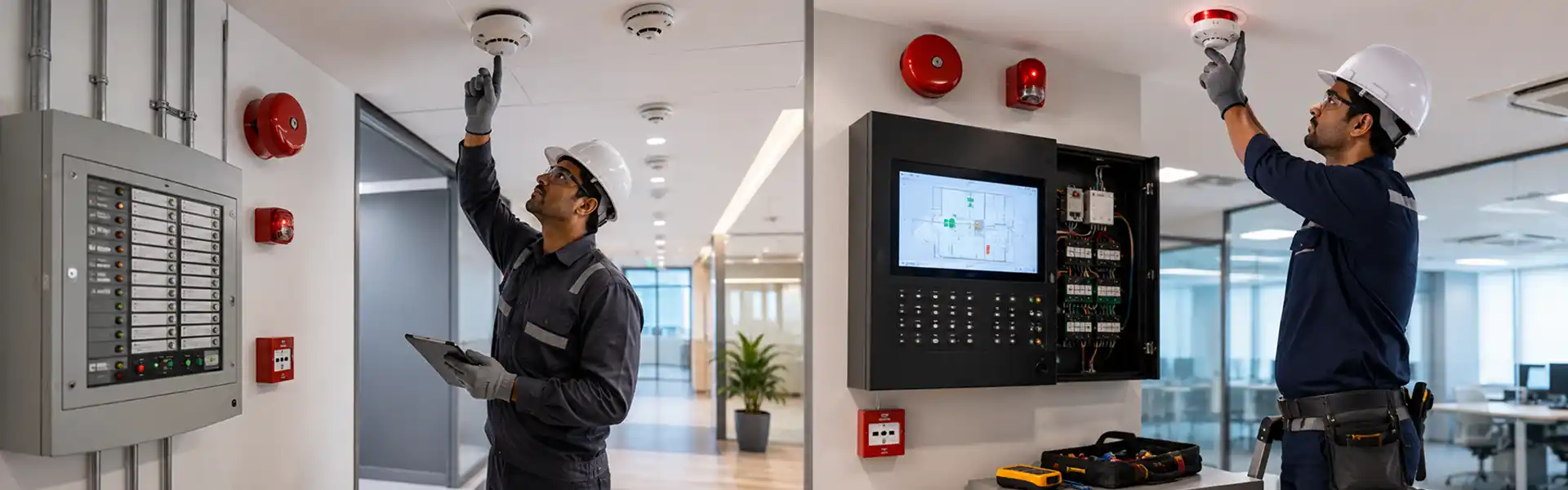
Addressable systems use advanced electronics and software. Their maintenance focuses on both the physical devices and the control panel. Typical maintenance includes:
- ● Testing smoke and heat detectors
- ● Checking manual call points
- ● Testing sounders and notification devices
- ● Inspecting the control panel
- ● Reviewing fault history
- ● Testing communication between devices
- ● Checking battery condition
- ● Cleaning detectors to remove dust
Since every device has its own address, technicians can quickly identify faulty equipment. This often reduces inspection time in large buildings. Software updates or system programming may also be required when devices are replaced or the building layout changes.
Conventional Fire Alarm Maintenance
Conventional systems have a simpler design, but maintenance usually takes more time. Routine servicing includes:
- ● Testing detectors in every zone
- ● Inspecting wiring and cables
- ● Testing manual call points
- ● Checking alarm sounders
- ● Inspecting the fire alarm panel
- ● Cleaning detectors
- ● Testing backup batteries
- ● Checking zone circuits
If a fault appears in one zone, technicians need to inspect multiple devices before finding the exact problem. This can increase maintenance time, especially in larger buildings.
Key Maintenance Differences Between Addressable and Conventional Systems
| Feature | Addressable System | Conventional System |
|---|---|---|
| Fault Location | Exact device is identified | Only the affected zone is shown |
| Inspection Time | Faster | Usually longer |
| Troubleshooting | Simple and accurate | More manual checking required |
| Large Building Maintenance | Easier | More time-consuming |
| System Diagnostics | Available through the panel | Limited information |
| Device Replacement | May need programming | Usually straightforward |
Which System Costs More to Maintain?
Many people think addressable systems always cost more because they use advanced technology. In reality, maintenance costs depend on several factors:
- ● Building size
- ● Number of detectors
- ● System age
- ● Service frequency
- ● Spare parts required
- ● Type of faults
An addressable system may have a higher AMC cost, but faster fault detection can reduce labour time during servicing.
A conventional system may have a lower AMC price, but troubleshooting often takes longer because technicians must inspect each detector within the affected zone. The total maintenance cost should be considered over the life of the system instead of looking only at the yearly AMC price see the benefits of an AMC for a fuller breakdown of the long-term value.
What Does a Fire Alarm AMC Usually Include ?
A Fire Alarm Annual Maintenance Contract (AMC) helps keep your fire alarm system in good working condition throughout the year. It usually covers scheduled preventive maintenance visits, testing of smoke detectors, manual call points, alarm sounders, backup batteries, and the control panel.
The service also includes detector cleaning, fault diagnosis, basic adjustments, and detailed service reports. Depending on the AMC plan, emergency breakdown support, replacement parts, and repair services may also be included. Before choosing an AMC, it is important to understand the scope of services, so you know exactly what is covered.
How Often Should Fire Alarm Systems Be Serviced?
The maintenance schedule for a fire alarm system depends on the type of building, its usage, and local fire safety requirements. Most commercial buildings follow a routine that includes monthly visual inspections, quarterly functional testing, half-yearly maintenance, and a complete annual system inspection. Buildings with high occupancy or environments exposed to dust and moisture may require more frequent servicing. Regular maintenance helps identify issues early and keeps the fire alarm system working reliably throughout the year.
Choosing the Right AMC Partner
Choosing the right AMC partner is just as important as selecting the right fire alarm system. Look for a company with experienced service engineers, preventive maintenance plans, quick fault response, detailed service reports, and support for different fire alarm brands.
It is also helpful to choose a provider with experience in commercial and industrial buildings. A reliable AMC partner can identify problems early, reduce unexpected downtime, and help keep your fire alarm system in good working condition throughout the year.
Conclusion
A well-maintained fire alarm system is more dependable during an emergency and can help reduce long-term repair costs. Understanding the maintenance differences between addressable and conventional systems makes it easier to choose the right AMC.
Trident Autosys delivers reliable fire alarm maintenance and AMC solutions tailored to commercial and industrial buildings. Get in touch with our experts today.
copyright © Trident Automation Systems Pvt. Ltd. All rights reserved.