
Fire Alarm AMC for Schools & Educational Institutions
Educational institutions carry a significant responsibility when it comes to the safety of students, teachers, administrative staff, and visitors. With large numbers of people occupying classrooms, laboratories, libraries, auditoriums, and residential facilities every day, fire safety cannot be treated as a one-time investment. A fire alarm system serves as a critical first line of defence, helping occupants respond quickly in the event of an emergency. However, even the most advanced system can become unreliable without regular inspection and maintenance. A Fire Alarm Annual Maintenance Contract (AMC) helps schools keep their fire detection and alarm systems operating effectively, reducing the risk of unexpected failures and supporting a safer learning environment throughout the year.
Let's take a closer look at the role of Fire Alarm AMC services and why regular maintenance is essential for educational facilities.
What Is a Fire Alarm AMC?
A Fire Alarm AMC is a maintenance agreement between a school and a fire safety service provider. Under this agreement, trained technicians inspect, test, clean, and maintain the fire alarm system at scheduled intervals.
The purpose is simple. The system should work correctly whenever it is needed. Regular maintenance helps identify small problems before they become serious issues.
An AMC generally includes:
- ● Routine inspections
- ● System testing
- ● Cleaning of devices and sensors
- ● Checking control panels
- ● Battery testing and replacement
- ● Repair of minor faults
- ● Emergency support when required
- ● Maintenance reports and records
These activities help keep the entire system ready for emergencies.
Why Schools Need Fire Alarm AMC Services
Many schools focus on academic excellence, infrastructure, and student activities. While these areas are important, safety should never be overlooked. A fire alarm system that is not maintained can develop faults without anyone noticing. Dust, aging components, damaged wiring, or weak batteries can affect performance.
A Fire Alarm AMC helps schools:
Protect Students and Staff:The primary goal is safety. A working fire alarm system gives people valuable time to evacuate during an emergency. Early warning can make a major difference in reducing risks.
Reduce Unexpected Breakdowns:Equipment failures often happen when maintenance is ignored. Regular inspections help detect issues early and reduce the chance of sudden system failure.
Support Emergency Preparedness:Schools regularly conduct fire drills and emergency response activities. A properly maintained alarm system supports these efforts and helps staff respond quickly when needed.
Save Long-Term Costs: Small repairs are usually less expensive than major system failures. Routine maintenance helps schools avoid costly replacements and emergency repair work.
Maintain Safety Standards:Many educational institutions are required to follow fire safety guidelines. Regular maintenance helps schools keep their systems in proper working condition and maintain necessary records.
Common Areas Covered During Maintenance
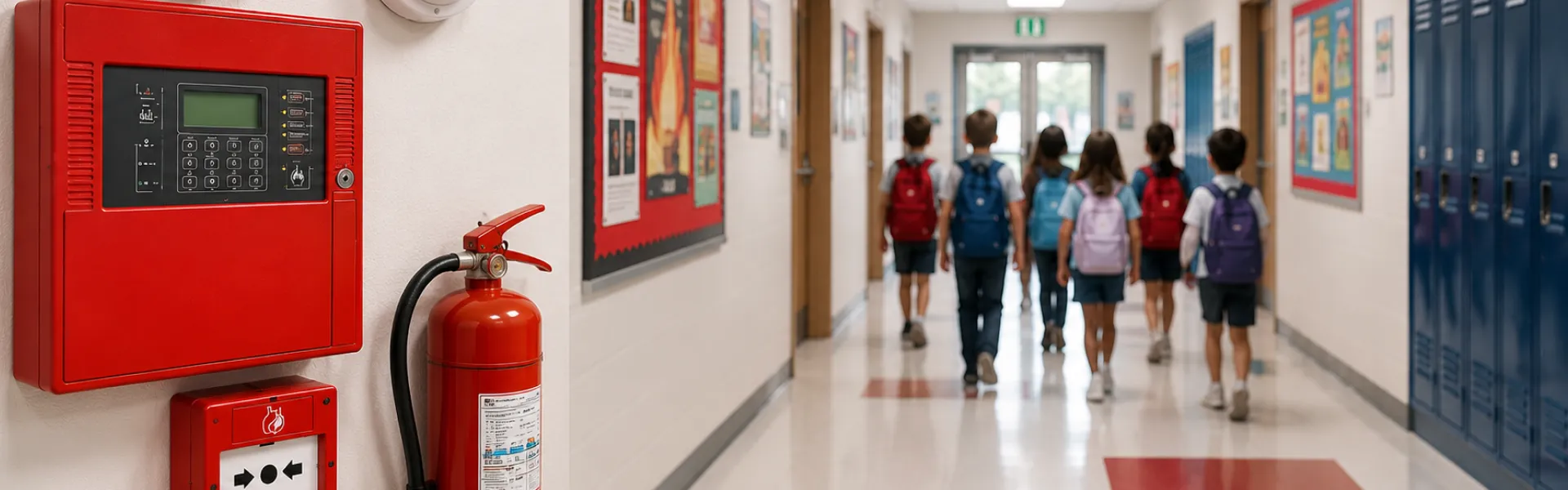
A school campus typically includes multiple buildings, classrooms, laboratories, libraries, and common areas, all of which rely on a properly functioning fire alarm system for safety. During AMC visits, technicians inspect key components such as fire alarm control panels, smoke and heat detectors, manual call points, alarm sounders, backup batteries, and power supplies. These inspections help identify faults early, maintain system performance, and support reliable emergency response when it matters most.
Benefits of Scheduled Maintenance Visits
Scheduled maintenance visits help schools take a proactive approach to fire safety rather than dealing with unexpected problems later. Regular inspections allow technicians to identify faults at an early stage, improve overall system performance, reduce downtime, and maintain reliable operation throughout the year.
These visits also help create accurate maintenance records, which can be useful during audits and safety inspections. With a planned maintenance schedule in place, school administrators can focus on academic activities and campus management with greater confidence in their fire protection systems.
Challenges Schools Face Without an AMC
Many educational institutions only seek technical support when a fault becomes visible. While this approach may appear to save money in the short term, it can lead to larger problems over time. Without regular maintenance, hidden system faults may remain undetected, batteries can fail unexpectedly, and detectors may become less effective due to dust or wear.
Schools may also experience an increase in false alarms, which can disrupt daily activities and reduce confidence in the system. During an actual emergency, even a minor issue can delay response efforts. A well-managed AMC helps minimise these risks by keeping the system regularly inspected and maintained.
Choosing the Right Fire Alarm AMC Provider
Selecting the right Fire Alarm AMC provider is an important decision for any educational institution. The quality of maintenance services can directly impact the reliability of the fire alarm system and the overall safety of the campus. Schools should look for a provider with proven experience in fire safety, qualified technicians, and a structured maintenance approach.
Factors such as regular inspection schedules, prompt technical support, detailed service reports, and expertise in handling different fire alarm systems should also be considered. A dependable AMC partner not only maintains equipment but also supports the school's long-term commitment to safety and preparedness.
Building a Culture of Safety
An effective fire safety strategy goes beyond installing and maintaining equipment. It requires a culture where safety awareness is actively encouraged across the institution. Schools can strengthen their preparedness by combining regular fire alarm maintenance with fire drills, staff training sessions, student awareness initiatives, emergency evacuation planning, and periodic safety reviews.
These activities help students and staff understand how to respond calmly and correctly during an emergency. When reliable fire protection systems are supported by ongoing education and preparedness efforts, schools can create a safer and more responsible environment for everyone on campus.
Conclusion
A reliable fire alarm system is an essential part of school safety, but its effectiveness depends on regular maintenance. A well-structured Fire Alarm AMC helps educational institutions reduce risks, improve system reliability, and stay prepared for emergencies.
Take a proactive approach to campus safety with Trident Automation Systems. Contact us today to learn how our Fire Alarm AMC services can support your institution.
copyright © Trident Automation Systems Pvt. Ltd. All rights reserved.