
Wet / Dry / Deluge Systems - Maintenance Differences & AMC Implications
A fire sprinkler system is not something you install and forget. It needs regular care to work properly when an emergency happens. Different types of sprinkler systems also need different maintenance routines. Wet, dry, and deluge systems are designed for different environments, so their inspections, testing, and servicing are never the same. Understanding these differences helps building owners plan maintenance, reduce repair costs, and avoid unexpected failures. It also makes it easier to choose the right Annual Maintenance Contract (AMC).
In this guide, we explain how each system is maintained and what to consider before selecting an AMC.
Why Fire Sprinkler System Maintenance Matters
A fire sprinkler system may remain unused for months or even years, but it must work immediately when a fire occurs. Even a small fault in a valve, sprinkler head, or pipe can stop the system from performing as expected.
Regular maintenance helps keep every component in good working condition and allows technicians to identify small issues before they turn into costly repairs. It also reduces the chances of unexpected system failures, supports compliance with fire safety regulations, and increases the overall lifespan of the system. In the long run, routine maintenance saves money and helps keep your building better protected.
Understanding the Three Types of Fire Sprinkler Systems
Before looking at maintenance, it helps to understand how these systems work.
Wet Pipe Sprinkler Systems
A wet pipe system always contains water inside the pipes. When heat activates a sprinkler head, water flows immediately onto the fire. This is the most common sprinkler system because it has a simple design and fewer moving parts.
Dry Pipe Sprinkler Systems
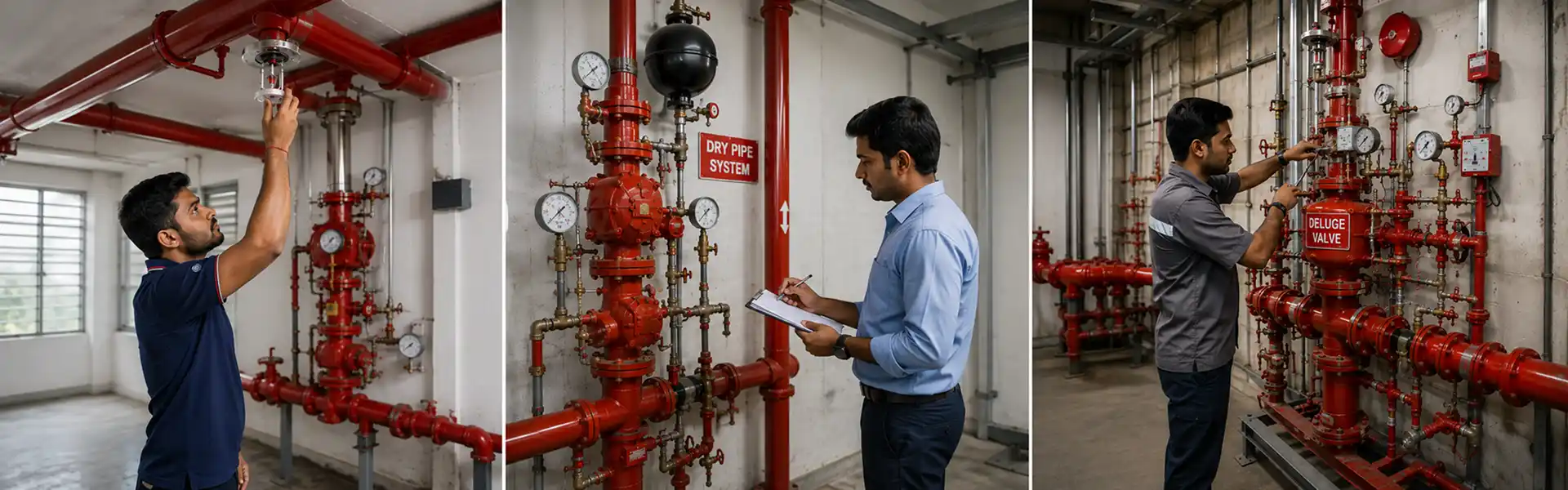
A dry pipe system keeps compressed air or nitrogen inside the pipes instead of water. Water stays behind a dry pipe valve until a sprinkler head opens.
Once the pressure drops, the valve opens, and water fills the pipes before reaching the fire. These systems are commonly installed in cold environments where water inside pipes may freeze.
Deluge Sprinkler Systems
A deluge system is designed for high-risk areas where fire can spread quickly. The pipes remain empty until a fire detection system activates the deluge valve. Once opened, water flows through every open sprinkler nozzle at the same time.
These systems are often used in:
- ● Chemical plants
- ● Aircraft hangars
- ● Power generation facilities
- ● Industrial manufacturing plants
- ● Fuel storage areas
Maintenance Requirements for Wet Pipe Systems
Wet pipe sprinkler systems are generally the easiest to maintain because the pipes are always filled with water, and the overall design is simple. Regular maintenance includes inspecting sprinkler heads for damage or blockages, checking valves to make sure they operate correctly, testing alarm devices, monitoring water pressure, looking for leaks, and inspecting pipes for signs of corrosion.
Over time, older pipes may develop internal corrosion, and small leaks can appear if routine inspections are missed. Since wet pipe systems have fewer mechanical components than other sprinkler systems, inspections are usually faster, maintenance is simpler, and servicing costs are often lower.
Maintenance Requirements for Deluge Systems
Deluge sprinkler systems require the most detailed maintenance because they work together with fire detection equipment and sprinkler controls. Every component must operate correctly for the system to respond during a fire.
Regular maintenance includes testing fire detection devices, inspecting the deluge valve, checking control panels, testing manual release stations, inspecting open nozzles, verifying water flow performance, and confirming that alarm systems operate as expected.
Since several systems are connected, inspections require careful planning and experienced technicians. Even a small fault in the fire detection system or control mechanism can prevent the entire deluge system from activating when it is needed most.
Comparing Maintenance Needs
| Maintenance Area | Wet Pipe | Dry Pipe | Deluge |
|---|---|---|---|
| System Complexity | Low | Medium | High |
| Maintenance Frequency | Standard | Higher | Higher |
| Valve Inspections | Basic | Detailed | Detailed |
| Air Pressure Checks | Not Required | Required | Not Required |
| Detection System Testing | No | No | Yes |
| Overall Maintenance Effort | Low | Medium | High |
This comparison shows why every sprinkler system cannot follow the same maintenance schedule.
How System Type Affects Your AMC
An Annual Maintenance Contract (AMC) should match the type of sprinkler system in your building. Wet pipe systems usually need basic maintenance, while dry pipe systems require additional checks for compressors, valves, and air pressure.
Deluge systems need the most detailed AMC because both the fire detection and sprinkler systems must be tested regularly. A good AMC should include scheduled inspections, testing, maintenance reports, and emergency support to keep the system reliable and reduce unexpected repair costs.
Common Maintenance Mistakes to Avoid
Many fire sprinkler system problems occur because regular maintenance is delayed or ignored. Common mistakes include overlooking small leaks, blocking sprinkler heads with stored items, skipping valve inspections, delaying the replacement of damaged parts, missing scheduled testing, and failing to maintain proper service records.
These issues may seem minor at first, but they can affect system performance during a fire. Regular inspections help identify and fix these problems early, keeping the system ready when it is needed most.
Choosing the Right Maintenance Partner
Choosing the right maintenance partner is just as important as selecting the right fire sprinkler system. An experienced service provider understands the maintenance needs of wet, dry, and deluge systems and follows proper inspection and testing procedures.
Look for a company with qualified engineers, preventive maintenance plans, quick emergency response, clear inspection reports, and support for fire safety compliance. A reliable maintenance partner helps keep your fire protection system in good working condition, reduces unexpected breakdowns, and improves long-term performance.
Conclusion
Every fire sprinkler system has different maintenance needs, and following the right service plan helps improve reliability over time. Choosing an AMC that matches your system can reduce risks and support safer building operations.
Need expert sprinkler system maintenance? Contact Trident Automation Systems for reliable AMC services, professional inspections, and trusted support tailored to your fire protection system.
copyright © Trident Automation Systems Pvt. Ltd. All rights reserved.