
Fire Alarm Control Panels: Types, How They Work & Which One You Need
A fire can spread in minutes, but the right warning can give people the time they need to get out safely. At the heart of that warning is a small but critical component: the fire alarm control panel.
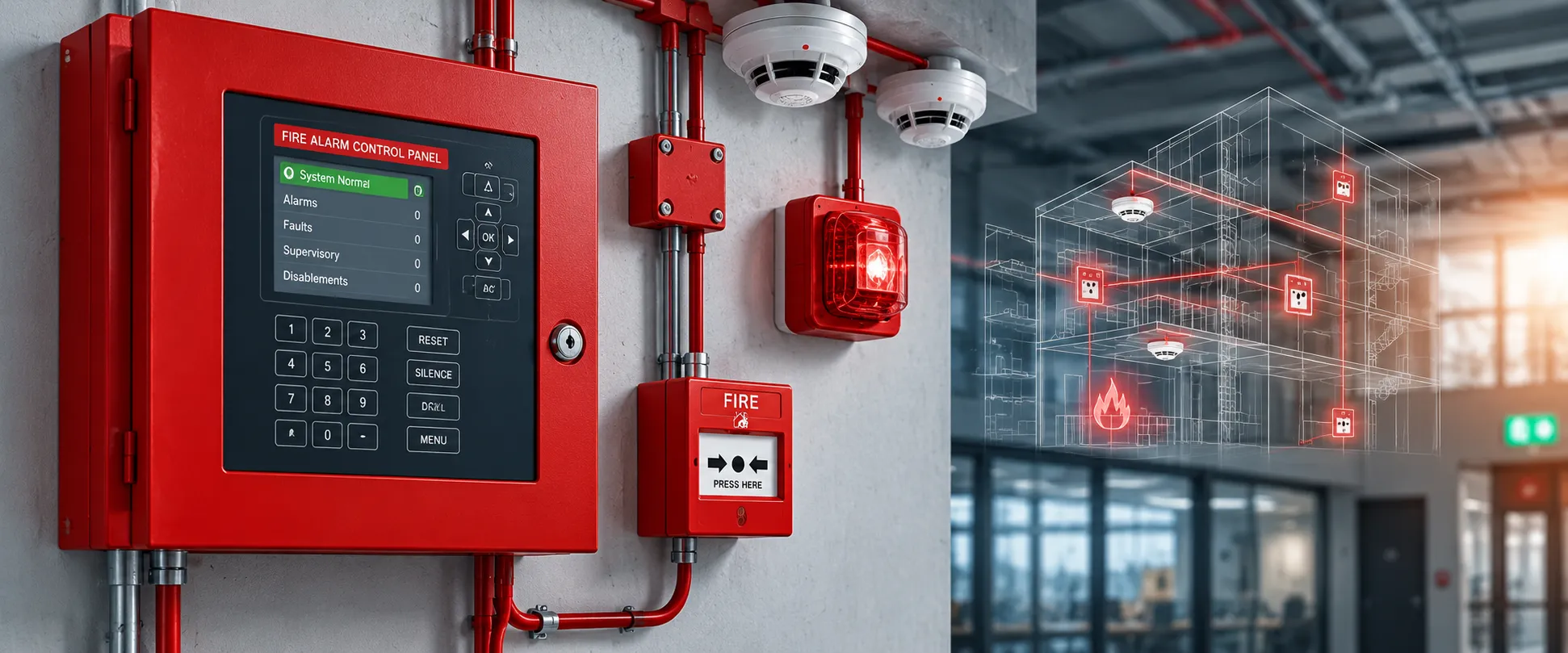
Often called the brain of a fire alarm system, this panel receives signals from smoke detectors, heat detectors, manual call points, and other connected devices. It processes those signals and activates the required alarms or responses. It can also monitor the system for faults, helping teams identify problems before an emergency occurs.
But not every building needs the same type of panel. In this guide, we explore how a fire alarm control panel works, the different types available, their key differences, and how to decide which system suits your building.
What Is a Fire Alarm Control Panel?
A fire alarm control panel is the central unit that connects and manages the different devices within a fire detection and alarm system.
Think of it as the system's command centre. Smoke detectors, heat detectors, manual call points, alarm sounders, and other devices send information to the panel. When the panel receives a signal indicating a possible fire, it processes the information and activates the programmed response.
A modern panel also does more than respond to alarms. It continuously checks connected circuits and devices for faults such as wiring problems, power issues, or communication failures.
Depending on the system, the panel may display a general zone where an alarm has occurred or identify the exact device that triggered it.
How Does a Fire Alarm Control Panel Work?
The basic process is easier to understand when broken into a few steps:
1. Detection
A smoke detector, heat detector, flame detector, or manual call point detects a potential fire condition.
2. Signal Transmission
The activated device sends a signal to the control panel through the system's wiring or wireless communication network.
3. Signal Processing
The panel evaluates the incoming signal and determines whether it represents an alarm, fault, or another system condition.
4. Alarm Activation
If an alarm condition is confirmed, the panel activates connected notification devices such as sounders, bells, strobes, or visual indicators.
5. Additional Response
Depending on how the system is designed, the panel can also communicate with other building systems. These may include access control, lifts, ventilation systems, fire suppression equipment, or building management systems.
This sequence allows a fire detection system to move from detection to notification and response without relying entirely on manual intervention.
Main Types of Fire Alarm Control Panels
The right panel depends on the building's size, layout, number of devices, operational requirements, and applicable fire safety standards. The three common options are conventional, addressable, and wireless systems.
1. Conventional Fire Alarm Control Panel
A conventional system divides a building into different zones. Multiple detectors and manual call points within a zone are connected to the same circuit.
When a device activates, the panel identifies the affected zone rather than the exact device.
For example, if several detectors are installed across the second floor, the panel may indicate "Zone 2 – Second Floor." Someone then needs to check that zone to identify the specific detector or location involved.
Best suited for:
- ● Small offices
- ● Shops
- ● Small commercial buildings
- ● Residential buildings
- ● Simple layouts with fewer detection points
Conventional systems are relatively straightforward and can be a practical option where precise device-level identification is not necessary.
2. Addressable Fire Alarm Control Panel
An addressable system provides much more detailed information. Each connected device has its own unique address, allowing the panel to identify which specific detector, call point, or module has been activated.
For example, instead of simply displaying "Zone 2," an addressable system could identify a programmed location such as "Second Floor – Server Room – Smoke Detector 23."
This can make it easier for security personnel and emergency teams to locate an incident quickly.An addressable system systems can also provide more detailed fault monitoring and support advanced system programming.
Best suited for:
- ● Hospitals
- ● Hotels
- ● Shopping malls
- ● High-rise buildings
- ● Large offices
- ● Industrial facilities
- ● Complex commercial buildings
For larger or more complex properties, the additional information provided by an addressable system can be particularly valuable.
3. Wireless Fire Alarm Control Panel
Wireless systems communicate with detectors and other devices using radio signals instead of relying entirely on conventional cabling.
They can be useful where installing new cables is difficult, disruptive, or impractical. This makes them worth considering for certain existing buildings, heritage properties, renovated spaces, and temporary installations.
However, the suitability of a wireless system depends on the building, system design, communication reliability, and applicable requirements.
Conventional vs Addressable: Which Is Better?
There is no single answer. The better option is the one that matches the building and its fire safety requirements.
| Factor | Conventional System | Addressable System |
|---|---|---|
| Detection | Zone-based | Device-based |
| Location Information | Identifies the zone | Identifies the individual device |
| System Complexity | Simpler | More advanced |
| Suitable For | Smaller, simple buildings | Larger or complex buildings |
| Fault Identification | More general | More detailed |
| Expansion | More limited | Generally more flexible |
| Initial Investment | Usually lower | Usually higher |
The important point is not simply to choose the cheapest option. A panel should be selected based on the building's size, occupancy, layout, risk level, number of devices, future requirements, and applicable standards.
What Should You Consider Before Choosing a Fire Alarm Panel?
Choosing a panel involves more than comparing product specifications. Consider these factors first:
Building Size and Layout
A small single-floor property may have relatively simple detection requirements. A multi-storey building with multiple wings, rooms, and high-risk areas may need more detailed monitoring.
Number of Devices
Count the smoke detectors, heat detectors, manual call points, sounders, modules, and other devices that the system needs to support. Also consider future expansion.
Required Level of Location Information
Ask how precisely you need to identify an alarm. If knowing the exact detector is important for rapid response, an addressable system may be more suitable.
Integration Requirements
Some buildings require the fire alarm system to interact with other systems. If your project involves lifts, access control, ventilation, suppression, or building management systems, discuss these requirements during system design.
Installation and Maintenance
A reliable system depends on proper design, wiring, configuration, testing, commissioning, and maintenance. Professional fire alarm control panel installation should be carried out by qualified personnel familiar with the system and applicable requirements.
Applicable Standards
The selected system should comply with the relevant fire safety standards and local regulations for the building. In India, system design and installation should be evaluated against applicable requirements, including IS 2189 and relevant provisions of the National Building Code.
Fire Alarm Panel Installation: Why Professional Work Matters
Installing a panel is not simply a matter of mounting a box on the wall and connecting wires.
The fire alarm panel installation process involves planning device locations, dividing zones or configuring loops, selecting appropriate cabling, connecting notification appliances, configuring the panel, testing devices, and verifying the system's response.
The installation team should also check that alarms, fault indicators, backup power, connected devices, and programmed responses operate as intended.
Poor installation can affect the performance of the entire fire detection system. That is why the installation should be treated as part of the overall fire safety design rather than as a standalone electrical task.
Fire Panel Board vs Fire Alarm Control Panel
You may hear terms such as fire panel board, fire alarm panel, fire alarm control unit, or fire alarm control panel used when discussing these systems.
In many practical conversations, these terms refer to the central equipment that monitors the fire detection network and controls alarm outputs. However, the exact terminology can vary between manufacturers, contractors, and regions.
What matters most is understanding what the equipment does, what devices it supports, and whether it meets the requirements of your application.
Why the Right Panel Matters
A fire alarm system is only useful when it can detect an emergency, communicate the information clearly, and trigger the required response.
The fire panel system sits at the centre of this process. A conventional panel may be perfectly suitable for a small and straightforward property, while an addressable system may be more appropriate for a large facility where knowing the exact location of an activated device matters.
The goal should not be to install the most complicated system available. It should be to install a system that provides the right level of detection, information, monitoring, and response for the building.
Conclusion
Choosing a fire alarm control panel is ultimately about matching technology to the building. Conventional panels can work well for smaller, simpler properties, while addressable systems offer more detailed information for larger and more complex facilities. Wireless solutions can also be useful where cabling presents challenges.
Before choosing a system, consider the building layout, number of devices, response requirements, future expansion, integration needs, and applicable fire safety standards. Most importantly, work with qualified professionals for design, installation, testing, and maintenance so the system is ready when it matters most.
Protect Your Building with Trident Automation System
Trident Automation Systems provides professionally designed fire alarm System AMC and safety solutions for commercial, industrial, residential, and other facilities. Talk to our team to find the right fire alarm control panel for your building.
copyright © Trident Automation Systems Pvt. Ltd. All rights reserved.