
Fire Detection Systems Explained: Smoke, Heat & Flame Detectors
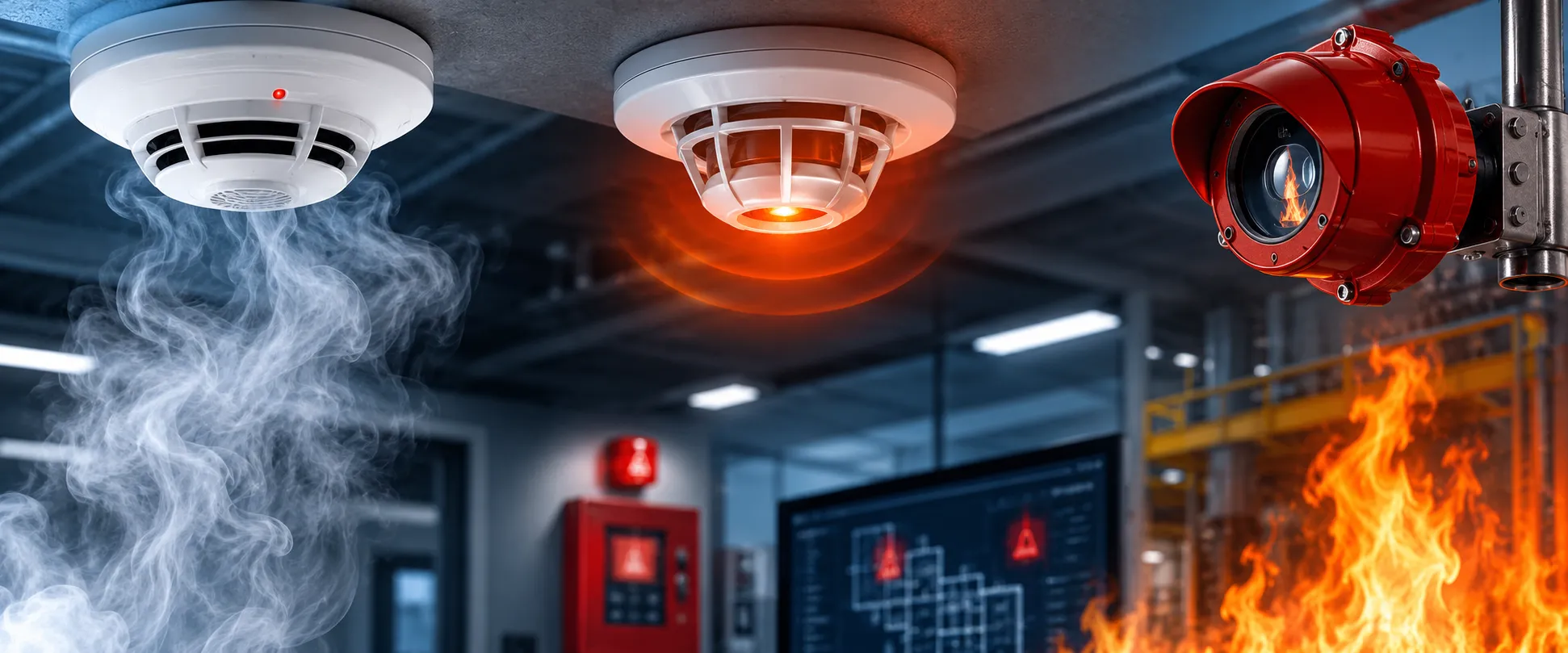
A fire rarely gives people much time to react. A small amount of smoke, a sudden rise in temperature, or a visible flame can quickly turn into a serious emergency. This is why a good fire detection system matters in homes, offices, factories, warehouses, hospitals, and other buildings. But not every detector works in the same way. Smoke detectors look for smoke, heat detectors respond to temperature changes, and flame detectors look for signs of an open flame. Understanding these differences can help you choose the right system and avoid costly mistakes during fire detection installation.
What Is a Fire Detection System?
A fire detection system is a group of devices that monitor for signs of a fire and send an alert when a potential fire is detected.
A basic system may include:
- ● Smoke detectors
- ● Heat detectors
- ● Flame detectors
- ● Fire alarm control panel
- ● Manual call points
- ● Sounders and strobes
- ● Duct detectors
- ● Repeater panels
- ● Backup batteries
- ● Wiring and other connected devices
The fire alarm control panel serves as the system's main point. It receives signals from the detectors and activates the alarm when a fire condition is identified. The right combination of devices depends on the building, room size, fire risk, ceiling height, ventilation, equipment, and how the space is used.
Smoke Detectors: The First Line of Warning
Smoke is often one of the first signs of a developing fire. Smoke detectors are designed to identify smoke particles and send a signal to the fire alarm system.
There are different types of smoke detection technology, but photoelectric smoke detectors are widely used in many building applications. They use a light source and sensor to identify changes caused by smoke inside the detector chamber.
Smoke detectors are commonly used in:
- ● Offices
- ● Hotels
- ● Apartments
- ● Schools
- ● Hospitals
- ● Retail stores
- ● Corridors
- ● Electrical rooms
They are especially useful in areas where smoke may appear before temperatures become high enough to activate a heat detector.
However, smoke detectors should not simply be placed wherever there is empty ceiling space. Air movement, dust, steam, cooking fumes, and other conditions can affect detector performance. That is why proper fire detector installation requires careful planning.
Heat Detectors: Useful Where Smoke Detectors May Not Work Well
A heat detector responds to temperature rather than smoke. This makes it useful in areas where smoke detectors may create frequent unwanted alarms. For example, kitchens, workshops, garages, boiler rooms, and dusty industrial areas may have conditions that make smoke detection less suitable. Heat detectors generally fall into two common categories:
Fixed-Temperature Heat Detectors
These detectors activate when the surrounding temperature reaches a set level. They can be useful in spaces where the temperature normally stays within a predictable range.
Rate-of-Rise Heat Detectors
These detectors respond to a rapid increase in temperature. They can identify a sudden heat change even before the surrounding temperature reaches a very high fixed point. The choice between these types depends on the room and its normal operating conditions.
Flame Detectors: Detecting Fire Where Flames Appear Quickly
A flame detector is designed to identify radiation produced by a flame. Depending on the detector design, it may use infrared (IR), ultraviolet (UV), or a combination of technologies. Flame detectors can be useful in places where a fire may develop quickly and produce visible flames before large amounts of smoke reach a conventional detector.
They may be considered for areas such as:
- ● Fuel storage areas
- ● Chemical facilities
- ● Industrial plants
- ● Aircraft-related facilities
- ● Large production areas
- ● Certain high-risk process areas
Flame detectors require careful positioning. The detector needs a suitable view of the area it is meant to protect. Obstructions, equipment, structural columns, and poor positioning can reduce its ability to see a flame. For this reason, commercial fire detection installation should be planned by professionals who understand the building and its fire risks.
Smoke vs Heat vs Flame Detectors: Which One Is Better?
There is no single detector that is best for every building.
| Detector | Detects | Common Use |
|---|---|---|
| Smoke Detector | Smoke particles | Offices, hotels, homes, corridors |
| Heat Detector | Temperature or rapid heat rise | Kitchens, workshops, dusty areas |
| Flame Detector | Flame radiation | High-risk industrial areas |
| Multi-Detector | More than one fire sign | Areas needing broader detection |
In some buildings, using more than one type can make the system more suitable for different areas.
For example, an office may mainly use smoke detectors, while a kitchen may need heat detection. A high-risk industrial area may need flame detection along with other fire protection equipment. The important point is not to select detectors based only on price. The detector must match the actual risk.
How Does Fire Detector Installation Work?
A professional fire detection system installation normally starts with a site assessment. The installer looks at:
- ● Building layout
- ● Room size and ceiling height
- ● Occupancy
- ● Possible fire sources
- ● Air movement and ventilation
- ● Machinery and electrical equipment
- ● Storage materials
- ● Areas with higher fire risk
- ● Existing fire safety equipment
- ● Access for testing and maintenance
After this assessment, the appropriate detectors and other system components can be planned.
The detectors are then positioned in suitable locations and connected to the control panel. Manual call points, alarms, visual indicators, and other devices may also be added depending on the system design. The installation is not finished when the devices are fixed to the ceiling. The complete system needs to be checked and tested.
Conventional vs Addressable Fire Detection Systems
The type of fire alarm system also matters.
Conventional Fire Alarm System
A conventional system divides the building into zones. When a detector activates, the panel generally tells you which zone has a fire signal. This type can be suitable for smaller buildings where detailed detector-level identification is not essential.
Addressable Fire Alarm System
An addressable system gives each connected device its own address. When a detector activates, the control panel can identify the specific device or location that sent the signal.This can be particularly useful in:
- ● Large offices
- ● Hospitals
- ● Hotels
- ● Shopping centres
- ● Warehouses
- ● Industrial facilities
- ● Multi-floor buildings
Trident Automation offers conventional and addressable fire alarm solutions and works with fire alarm components such as control panels, smoke detectors, heat detectors, duct detectors, sounders, manual call points, repeater panels, and multi-detectors.
Why Detector Placement Matters
Buying a good detector does not automatically create a good fire detection system. Placement has a direct effect on how quickly a detector can identify a fire. A detector placed too far from the likely source of smoke may respond later. A detector placed near steam, dust, or other unwanted sources may create repeated false alarms.
Large buildings also need a carefully planned layout because walls, beams, ceilings, ventilation systems, machinery, and storage racks can affect detection. This is why fire detection system installers should assess the site before deciding where devices should go.
Fire Detection for Commercial and Industrial Buildings
Commercial buildings have different risks from residential spaces. An office may have computers and electrical equipment, while a warehouse may contain large quantities of packaging or stored goods.
Factories may have machinery, fuel, chemicals, heat-producing equipment, or other specific hazards. A commercial fire detection installation should therefore consider the actual activities taking place inside the building.
For example:
- ● Offices: Smoke detection is commonly important.
- ● Warehouses: Detection needs to account for high ceilings, storage racks, and large open areas.
- ● Hospitals: Early warning is important because evacuation can be difficult.
- ● Hotels: Guest rooms, corridors, kitchens, and service areas may require different approaches.
- ● Factories: Detector selection should reflect machinery and production risks.
- ● Server rooms: Special consideration may be needed because sensitive equipment can be affected by fire and smoke.
Common Fire Detection Mistakes to Avoid
Some fire safety problems happen because the system is treated as a one-time purchase. Common mistakes include:
- ● Choosing detectors without assessing the fire risk
- ● Using the same detector type everywhere
- ● Poor detector placement
- ● Ignoring false alarms
- ● Not testing the system regularly
- ● Delaying battery replacement
- ● Blocking detectors with storage or construction materials
- ● Installing equipment without considering future maintenance
- ● Treating the alarm system separately from the building's wider fire safety plan
A good system should make sense for the building today and remain practical to maintain later.
Conclusion
Smoke, heat, and flame detectors all play different roles in fire safety. The right choice depends on what can cause a fire, how quickly it may develop, and the conditions inside each area. A well-planned fire detection system combines suitable detectors with a control panel, alarms, manual call points, backup power, and regular testing. Good fire detector installation also matters because even the best equipment can perform poorly when it is placed incorrectly. For commercial and industrial buildings, working with an experienced installer can make the planning process much easier and help build a system suited to the actual risks.
Need help planning fire detection for your office, warehouse, factory, or commercial property? Contact Trident Automation for a site assessment, system recommendation, professional installation, and ongoing maintenance support.
copyright © Trident Automation Systems Pvt. Ltd. All rights reserved.